Tucked into the folds of the eastern Himalayas, Bhutan is often whispered to be the real-world Shangri-La — a rare, secluded kingdom where ancient Buddhist traditions continue to shape daily life.
As the world’s last remaining Buddhist monarchy, Bhutan boasts more monasteries and temples than there are days in the year, each one a stage for colorful festivals that fill the valleys with masked dances and ancestral rhythms.
Beyond its sacred sites, Bhutan unfolds in waves of emerald hills and thick forests, its horizon punctuated by unnamed peaks so remote that they require days of foot travel to reach the nearest village. It’s a pilgrimage for the curious, and a paradise for culture-seekers who don’t mind earning their views one trail at a time.
Outdoors-focused tour operator Wilderness Travel offers three tours that include Bhutan. The 12-day Hikers Journey to Bhutan, which I recently joined, is focused exclusively on Bhutan and is always scheduled to coincide with one of the country’s famous festivals. Though hiking is at the heart of this journey — with treks featured nearly every day — this thoughtfully crafted tour offers far more than just time on the trail.
Wilderness Travel group sizes average about 10 clients, with a maximum of 16, and everyone travels together in a large van. If there are more than eight guests, a second guide is added to ensure there's sufficient support and attention during hikes. My group had five participants.
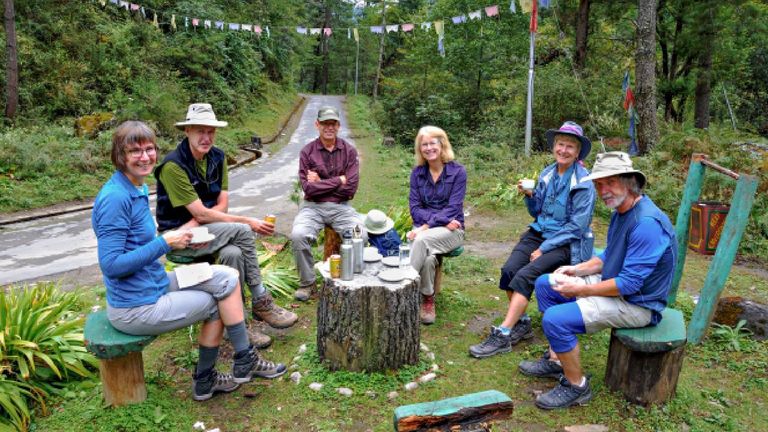 Wilderness Travel offers a guide to support participants during hikes.
Credit: 2025 Wilderness TravelBecause there are so few flights into Bhutan and tourism visas are complicated and expensive to obtain, the first day of the trip actually started in Bangkok, Thailand, where we boarded an early morning flight to Bhutan to meet our guide at the airport in Paro. Wilderness Travel suggests guests spend at least one night in Bangkok to begin adjusting to the time difference for a smoother transition in Bhutan. (The operator also offers a Bangkok extension before and after the Bhutan trip, which many people on my itinerary took advantage of.)
Inside the Itinerary
A short drive brought us from Paro to “big city” Thimphu, where we joined our guide for lunch and an itinerary rundown. After cultural visits to an impressive temple and larger-than-life Buddha statue, we had the afternoon free to rest and begin acclimating to the elevation change (Thimphu sits at an elevation of nearly 8,000 feet).
The next few days were spent bouncing around tiny towns and verdant villages, where we admired homemade shrines large and small and made our way up forest-lined hills to mountaintop temples. At one temple, we saw a dozen gray langur monkeys slowly climbing up the hill; one stole a bag of food left behind by a monk. Jasmine flowers perfumed the trail, while enormous oak and rhododendron trees provided shade from the sun. Though mornings often started out chilly (and we even experienced light snowfall one day), afternoons tended to be warm and sunny. I kept extra layers in my daypack to adjust to the constantly changing temperatures.
Next, we were off to Punakha Valley, where the hikes were stunning, but the real draw was the 17th-century Punakha Dzong (fortress). This elaborate structure, which was destroyed at least seven times by fires, floods and earthquakes, was originally built as a fortress of defense; now, like dzongs across the country, they serve as a combination of government offices and religious centers.
Because I visited Bhutan in March, my group attended the Punakha Tshechu festival at the Punakha Dzong. Dozens of dancers twirled before us in elaborate costumes representing demons, spirits, animals and deities. We spent several mesmerizing hours watching these dazzling dances before admiring the dzong from a distance during a riverfront picnic.
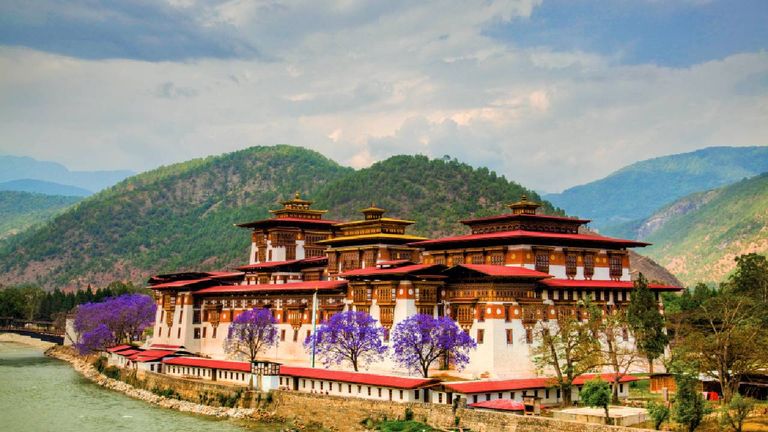 Hikers can enjoy stunning views of the 17th-century Punakha Dzong.
Credit: 2025 Wilderness TravelWhile many of the western temples and dzongs we visited receive ample amounts of tourists given their proximity to the airport, the central city of Bumthang is quite the opposite. There, we were often the only group touring several temples and we enjoyed a private tour of a nunnery, including a Buddhist chanting session and butter cake demonstration. Instead of dining with other travelers in roadside restaurants, we dug into a homemade lunch in a farmhouse. In the evenings, we treated ourselves to rustic hot stone baths. (These countryside baths are more traditional, but more luxurious versions are available in some luxury hotels, such as Gangtey Lodge Bhutan.
The tour wrapped up back in Paro, where our highly anticipated hike took us to Paro Taktsang, also known as the Tiger’s Nest monastery. Surely the most photographed site in all of Bhutan, this was both the busiest and most challenging trek of our itinerary — but the payoff was well worth it.
Make sure clients are aware: The trail is extremely steep, and some sections are fully exposed to the sun. Nearly every visitor to Bhutan wants to make this hike — including many who have not done any training for it — and while it is challenging, there are plenty of places to rest along the way (including a cafe with proper bathrooms).
Back at our hotel — one of the only Bhutanese-owned luxury lodges in the country — I showered, stretched in the yoga room and then headed into town for some last-minute souvenir shopping. I decided on Bhutanese lemongrass oil, Himalayan tea and a vibrantly woven handmade jacket that I now wear as a casual and festive business blazer.
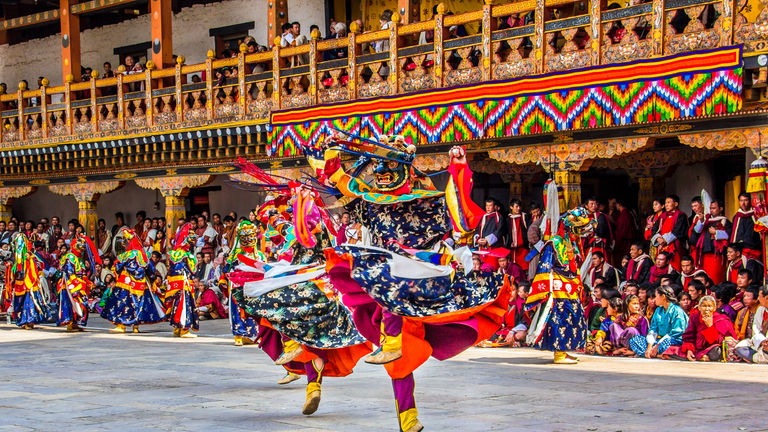 Visitors can immerse themselves in Bhutan’s culture, history and Buddhist tradition while exploring.
Credit: 2025 Wilderness TravelThe itinerary is efficient and well-designed, taking travelers to must-see attractions such as the Taktsang monastery as well as lesser visited destinations like Bumthang. It provides a comprehensive introduction to Bhutan’s culture, geography and history, with a strong focus on Buddhist tradition. Wilderness Travel was one of the first international tour operators in Bhutan after the country opened to tourism in 1974 and, as a result, has some of the most experienced and knowledgeable guides in the country. My group was absolutely delighted with our guide, who was a walking encyclopedia.
When to Go and What to Know
Wilderness Travel’s Bhutan itineraries vary slightly depending on the time of year and what festival is taking place. For instance, spring festivals are in Punakha and Paro, while fall festivals are in Jakar or the Phobjikha Valley (known for its black-necked cranes).
While there is no bad time to visit the country, each season has its own appeal. March is cooler and less crowded, while April and May are warmer and greener. September trips are warmer and less crowded than October, but they may be a bit rainier. November can be chilly, but clients will have a better chance of spotting blue skies and black-necked cranes.
Clients should know that while the 12-day Hikers Journey to Bhutan itinerary from Wilderness Travel is, indeed, a hiking trip, it’s moderate-level and only one day is extremely steep and challenging. This hike is saved for the last day, after guests have had over a week to acclimate to the elevation. Most guests are in their 60s and 70s and the majority hike every day. However, guests are also welcome to skip hikes if they choose. Though some of the secluded monasteries and hilltop temples can only be reached by hiking, some can also be reached by bus.
