Travel advisors know the value of establishing clear boundaries with their clients. But new research from TravelAge West shows they often struggle to put those boundaries into practice.
In a survey of nearly 300 advisors — part of the Need to Know research series — 68% of respondents feel that it is very important to have boundaries with clients. However, when it comes to acting on those intentions, only 25% of advisors set clear guidelines. The other 75% either don’t have guidelines or only enforce them sometimes.
 Sixty-eight percent of respondents feel that it is very important to have boundaries with clients.
Credit: 2025 TravelAge West
“Boundaries are what keep us sustainable as advisors,” said Kendra Barber, owner and travel coordinator at Roundtrips and Romances. “Without them, we risk burnout and can’t give clients the thoughtful, high-quality service they deserve. However, I’m not surprised that so many agents don’t see it this way — they feel pressure to be available 24/7 and think it’s ‘working.’ But over time, that approach just isn’t sustainable.”
Barber understands why so many advisors fail to successfully implement boundaries, pointing out that putting them into practice takes consistency and clear systems.
“It’s not enough to think about boundaries; you have to communicate them and stick to them, so clients learn to respect the process,” she said. “There’s a lot of training out there for suppliers and destinations, but very little on how to build real systems and boundaries that work specifically for advisors.”
In general, advisors say clients are good at respecting boundaries most of the time (57%), or about half the time (24%). Only 9% of advisors say they often have to remind clients about their boundaries.
Advisors say their biggest challenge in maintaining professional boundaries is their desire to provide excellent service, followed by concerns about missing opportunities; technology making them too accessible; fear of losing a client; and the difficulty of separating their work and personal life.
Most advisors say the need to be available to their clients causes them to feel overly stressed or burned out some of the time (54%) or often (15%).
 Most advisors say they feel stressed or burned out attending to clients' needs.
Credit: 2025 TravelAge West“Being available 24/7 sounds like great service, but in reality, it leads to exhaustion, mistakes and constantly waiting for the next notification,” Barber said. “What actually serves the client best is clear response-time expectations and consistent communication.”
For Barber, boundaries are not about being less available, they are about being more dependable.
What actually serves the client best is clear response-time expectations and consistent communication.
“Defining office hours and sticking to them builds trust, because clients know exactly when and how you’ll respond,” she said. “But too often our industry markets ‘24/7 availability’ as a perk. However, with boundaries we can be healthier advisors with less burnout and stress.”
Most advisors communicate their boundaries via email (51%); verbally during their first meeting or call (40%); or electronically via their email signature or voicemail greeting (34%).
When it comes to after-hours client inquiries, the majority of advisors (59%) will respond if it’s urgent. Likewise, most agents (49%) say they try to set limits on working on weekends or holidays but will work if needed.
And when advisors do need to take a workday off, the majority (57%) check in periodically throughout the day to stay on top of messages. Some (49%) notify clients in advance, and others (26%) will have a colleague or assistant cover urgent requests.
However, most advisors (49%) say they never outsource parts of their workload. A third of agents (33%) say they do it rarely, although they prefer not to.
Over half of respondents (51%) do not currently have a tech solution for handling urgent requests but would like to find one.
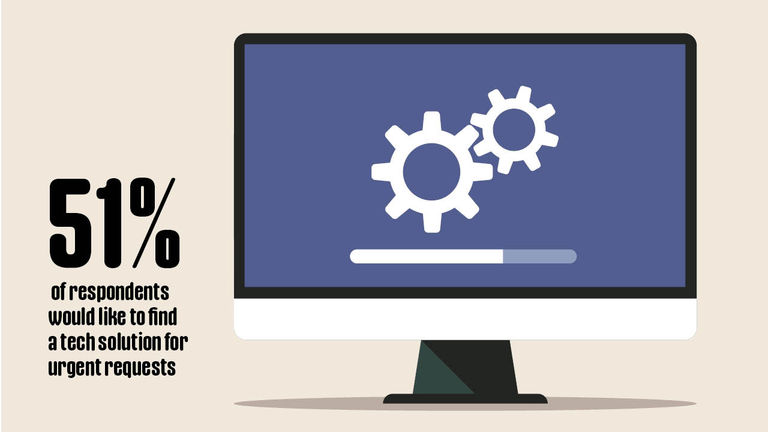 Half of travel advisors are seeking a tech solution to help them with urgent requests.
Credit: 2025 TravelAge West“A lot of agents don’t know who would help their clients in a travel emergency if it wasn’t them,” she said. “Honestly, we also often overemphasize what counts as an ‘urgent’ request. Missing a connecting flight is very different from a late-night payment or new-trip question.”
Barber says that nine times out of 10, client education and communication are the actual “tech solution” advisors need.
“I give my clients clear emergency guides so if something happens, their first step is to read the guide and act, then contact me,” she said. “Even if I’m unavailable — which every advisor is at some point — they can handle the situation confidently and still feel supported.”
Need to Know Travel Survey Series
“Need to Know” is a research series from TravelAge West that tracks the responses of travel advisors as they relate to various travel trends and topics. This survey recorded the responses of 290 advisors across the U.S. See more Need to Know stories here.
