The Hawaii Tourism Authority’s (HTA) new advisory board conducted its first official meeting in late August, returning some normalcy to the embattled organization after all 12 members of the previous board resigned in July at the request of Hawaii Governor Josh Green.
The HTA’s current advisory board consists of eight new members and four individuals who have been reappointed, including Kimberly Agas, general manager for Aulani, A Disney Resort & Spa.
“Tourism is a main economic driver for our islands, and members of this new HTA advisory board will be vital stewards in guiding it forward,” Green said in a statement, announcing his new appointees. “We’re starting fresh, rebuilding trust, and ensuring our tourism decisions reflect our values, our communities and a sustainable future for our people and island home.”
New Oversight
In May, Green signed Senate Bill 1571 into law, stripping the HTA board of its policy-setting powers and reducing it to an advisory role.
Rep. Adrian Tam, chair of the house committee on tourism, told me over the phone this week that Senate Bill 1571 “was a long time coming” and listed a number of HTA difficulties in recent years.
“We've had massive infighting within the board,” Tam said. “We've had several unfavorable audits, lawsuits, procurement violations and even a major contract dispute between the Council for Native Hawaiian Advancement (CNHA) and the Hawaii Visitors & Convention Bureau (HVCB).”
That wide-ranging accumulation of HTA missteps spurred lawmakers into action earlier this year, according to Tam.
“We've lost so much trust within the legislature that we felt we needed to downgrade the HTA's policy and leadership board to become just an advisory board, and that the HTA needed more oversight to restore that trust,” he said. “And we needed a major upending of the entire board to start fresh.”
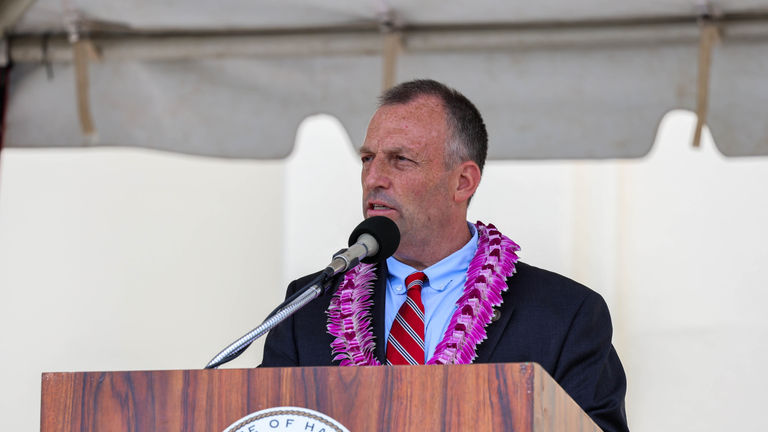 Hawaii governor Josh Green has appointed a new 12-member advisory board for the Hawaii Tourism Authority.
Credit: 2025 Hawaii Governor Josh GreenTam says the HTA’s function remains the same under the new legislation, including the agency’s contractual tourism marketing role working with the HVCB and CNHA, as well as its destination management responsibilities for the Hawaiian Islands.
“But, in the past, the board was able to dictate the budget and make policy changes within the HTA,” he said. “Now that the board is advisory, many of these policy changes have to come from the legislature or the Department of Business, Economic Development & Tourism (DBEDT). It doesn't stop them from making proposals, but it provides more legislative oversight and public input into that process.”
Industry Concern
Not everyone in Hawaii’s tourism industry is happy about state lawmakers taking a more active role in HTA management, including Kevin Aucello, principal of Honolulu-based hospitality consulting firm Powell & Aucello.
“The HTA was sort of a quasi-governmental institution before, but now, it feels like it’s been fully taken over by the government,” said Aucello, who worked for years at Marriott International and Outrigger Resorts & Hotels. “I'm concerned because, generally speaking, government doesn't run anything very well.”
Aucello says that in the past, the HTA’s efforts to market Hawaii through contractors such as the HVCB have been tremendously beneficial for the destination’s hotels and resorts. But he’s worried that will change under this new system of government oversight.
“I think, going forward, the hotel industry is going to get less marketing help than they used to in the past from the HTA because the legislature will have a lot of different agendas,” Aucello said, mentioning visitor education initiatives and resource management as a couple examples.
Aucello also says the current turmoil and uncertainty at the HTA has created a troubling distraction at a particularly inopportune moment. Total visitor arrivals to Hawaii were down 4.4% year-over-year in July and visitor spending was down 4.3%, according to DBEDT data.
“Maui’s still hurting and down about 20%,” Aucello said, referring to the destination’s tourism recovery following the Lahaina wildfires. “And Oahu is not doing well. Kauai and the Big Island were doing really well, but they've sort of slowed down, too. So we've got some pretty good headwinds, and Maui could really use a marketing push to help it come back.”
